

February 27, 2026
We rarely think about our heating systems — until something goes wrong.
We adjust the thermostat, hear the system kick on, and within minutes our homes are warm and comfortable. It feels effortless. But modern comfort is the result of centuries of innovation — and increasing complexity.
Let’s take a quick look at how far we’ve come.
From Wood Fires to Coal Stoves
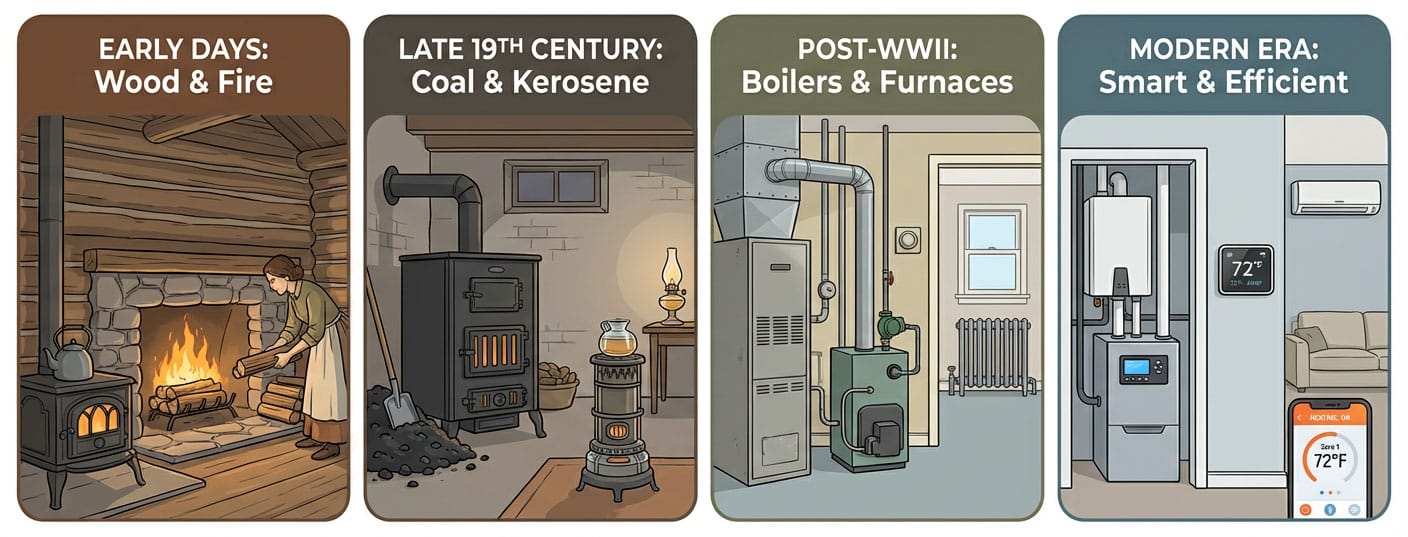
In the early days of North America, heating was simple. Homes were warmed by fireplaces and wood stoves. If you had firewood and a match, you had heat. The biggest challenge wasn’t system failure — it was running out of wood.
By the late 19th century, coal and kerosene became common fuel sources. These systems were still relatively straightforward: load fuel, light it, stay warm.
Simple systems. Fewer moving parts. Very little automation.
The Rise of Boilers and Furnaces
As the industrial revolution took hold, heating technology evolved rapidly. Steam boilers and warm air furnaces began appearing in homes across the country. Natural gas lines and oil tanks replaced manual fuel loading.
Post–World War II housing expansion accelerated innovation even further. Blowers, power burners, radiators, convectors, baseboard systems, and multi-zone heating dramatically improved home comfort.
Heating was no longer just about survival — it was about convenience.
Modern Heating: Incredible — and Complex
Fast forward to today, and we enjoy:
- High-efficiency condensing furnaces and boilers
- Printed circuit boards replacing mechanical controls
- Wi-Fi thermostats
- Programmable controllers
- Mini-split heat pumps
- Remote access from smartphones
Today’s systems maximize comfort, efficiency, and cost control.
But there’s a tradeoff.
The Hidden Reality of Modern Comfort
Automated systems can break.
Unlike a wood stove that required little more than fuel and fire, modern heating systems depend on:
- Electricity
- Sensors
- Control boards
- Motors
- Valves
- Safety devices
If one component fails, the entire system can shut down — often during extreme cold, nights, weekends, or holidays.
Complexity brings comfort — but it also increases the potential for breakdowns.
Why Preventative Maintenance Matters
While no heating system can be guaranteed against failure, regular service significantly improves reliability and longevity.
Preventative maintenance helps:
- Identify worn parts before they fail
- Improve system efficiency
- Reduce emergency repairs
- Extend equipment lifespan
The goal isn’t perfection — it’s improving your chances of uninterrupted comfort.
Heating technology has evolved tremendously. Making sure it continues to work when you need it most requires proactive care.
If it’s been a while since your system was serviced, now is the perfect time to schedule a professional check.